The Hidden Environmental Impact of Plastic Bottles
Rotterdam, The Netherlands – 18th June 2026
Plastic water bottles are used every day across the world. They are convenient, easy to carry, and often seen as a simple solution for drinking water on the go. But behind that convenience, there is a much bigger impact.
From production and transport to waste and recycling challenges, bottled water comes with hidden costs that are often overlooked. As the demand for clean drinking water continues to grow, it is becoming increasingly important to look at more sustainable and local alternatives.
The true scale of plastic bottle use
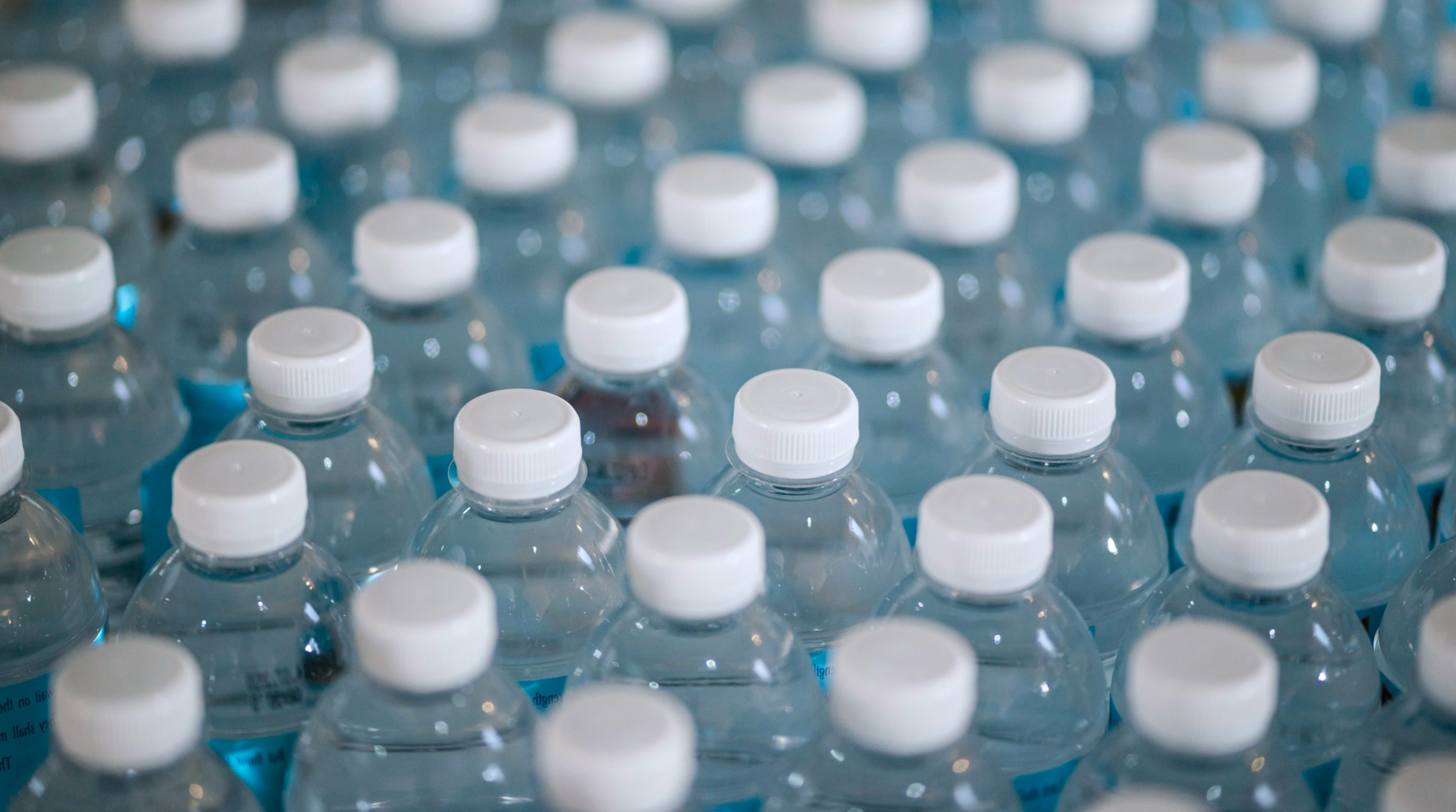
The scale of plastic bottle consumption is enormous. It is estimated that around 1.3 billion plastic bottles are used every day across the world, which comes down to approximately 1 million plastic bottles every minute.
Many of these bottles are used only once, before being thrown away. But the impact does not end there. Each bottle is part of a much larger system. Plastic bottles require raw materials, energy, water, packaging, transport, storage, and waste management. When this happens billions of times a day, the environmental impact becomes much larger than just one empty bottle.
Used in minutes, lasting for centuries
One of the biggest problems with plastic bottles is how long they remain in the environment. A single plastic bottle can take up to 450 years to fully decompose. This means that a bottle used for only a few minutes can remain in the environment for centuries.
Even when plastic starts to break down, it does not simply disappear. Instead, it can turn into smaller plastic particles, known as microplastics and nanoplastics. These can remain in the environment long after the original bottle is gone, contributing to pollution in landfills, waterways, oceans, and natural ecosystems.
“This makes plastic bottles a long-term environmental issue, not just a short-term waste problem.”
The water costs you do not see
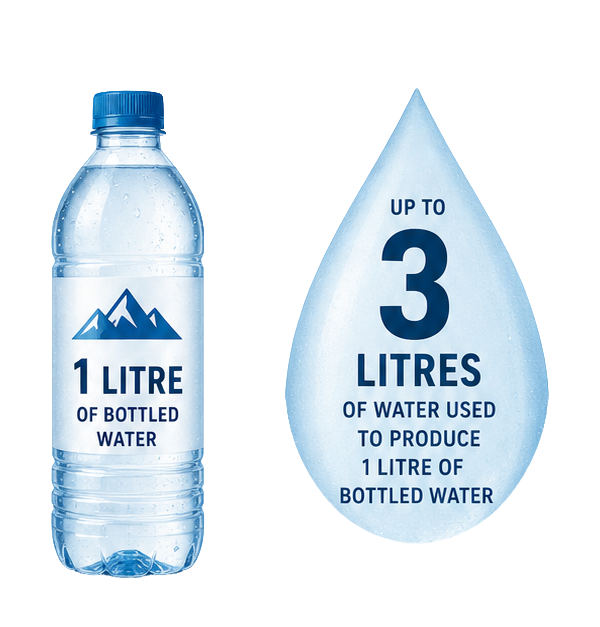
Bottled water also has hidden water costs. The production process can be highly resource-intensive, using up to three litres of water for every one litre of bottled water sold. This means that the water inside the bottle is only part of the total water footprint.
Water is used throughout the process, from producing the plastic bottle to cleaning, filling, packaging, and distribution.
This is especially important in regions where water availability is already under pressure. In these areas, producing and transporting bottled water can add even more strain to existing water systems.
The recycling reality
Recycling is often seen as the answer to plastic waste. While recycling is important, it does not solve the full problem, as most plastic water bottles do not get a second life. Around 80% of plastic bottles are discarded, often ending up in landfills or contributing to growing waste problems.
Even when bottles are collected for recycling, the process is not always simple. Recycling systems can be limited by contamination, infrastructure, cost, and demand for recycled materials.
This means that relying on recycling alone is not enough. To reduce the impact of plastic bottles, we also need to reduce our dependence on single-use packaging in the first place.
A high carbon price
Plastic bottles also come with a carbon footprint. Compared to tap water, bottled water can have a carbon footprint up to 3,500 times higher. This is because bottled water depends on a full production and distribution process, including plastic manufacturing, bottling, packaging, transport, storage, and cooling.
Every step adds to the total environmental impact. In a world where businesses, communities, and consumers are looking for more sustainable choices, this is an important point to consider.
”Bottled water may seem like a simple product, but its environmental cost can be much higher than many people realize.”
The need for better alternatives
Plastic bottles have played an important role in making drinking water accessible in many situations, but the environmental impact is clear.
At Rainmaker Holland, we believe that clean drinking water should be made available in a more local, sustainable, and climate-resilient way. Instead of depending only on bottled water and traditional supply systems, alternative water technologies can help reduce pressure on existing infrastructure and limit the need for single-use plastic packaging.
Meet AEROS
AEROS is Rainmaker Holland’s upcoming air-to-water generator, designed to create clean drinking water directly from the air.
By using humidity in the air as a source, AEROS can support access to drinking water without the need for plastic bottles. This makes it especially relevant for homes, offices, hospitality locations, schools, remote areas, and other places where a more local water solution can make a difference.
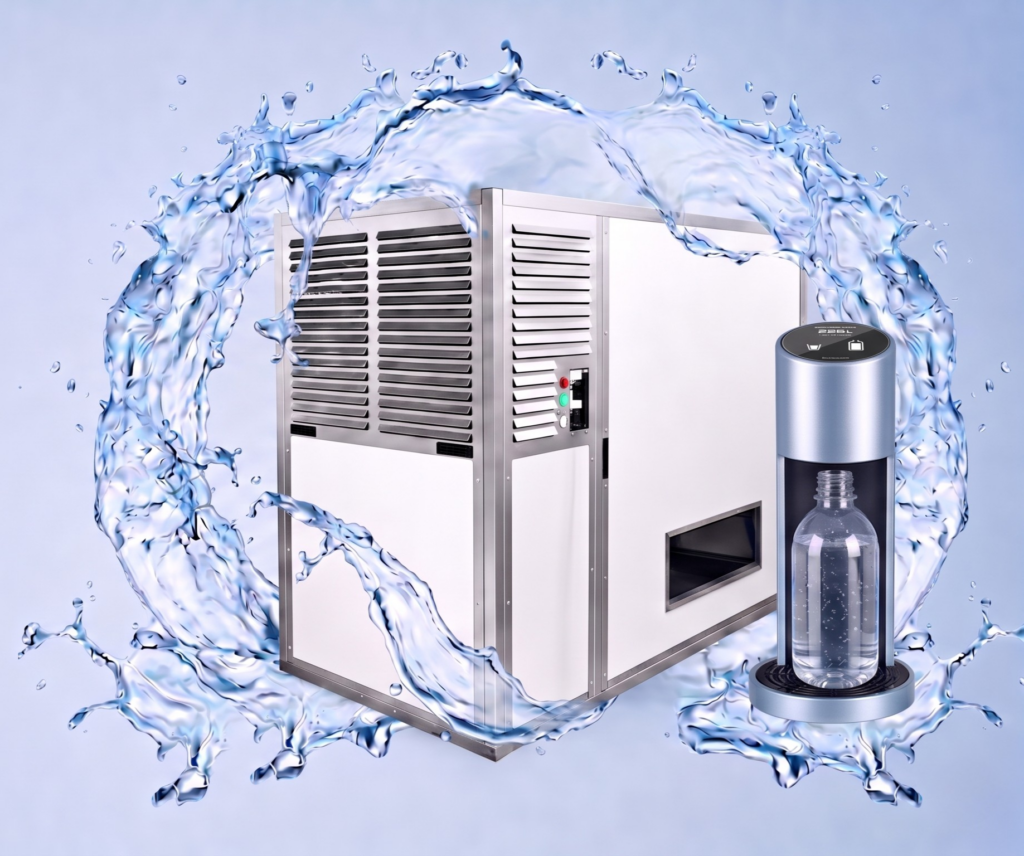
AEROS offers a different way of thinking about drinking water. Instead of transporting bottled water from one place to another, clean water can be generated closer to where it is needed.
Learn more about Rainmaker Holland’s AEROS and discover how it can help create a more sustainable water future:
A more sustainable future
The impact of plastic bottles is not only about waste: it is about water use, energy use, emissions, transport, and long-term pollution.
To build a more sustainable future, we need to rethink how drinking water is sourced, produced, and provided. Local and alternative water generation should be part of that shift.
At Rainmaker Holland, we are working towards a future where clean water can be made available in a smarter, more sustainable, and more resilient way. Through solutions such as AEROS, our other air-to-water generators, our water-to-water systems and rainwater capturing solutions, we help communities reduce reliance on traditional water supply chains and improve local access to clean water.
Discover Rainmaker Holland’s complete range of water solutions and how they can support a more sustainable water future: