

What Are Atmospheric Rivers? The Hidden Highways Above Us
Rotterdam, April 23rd, 2026
When we think about rivers, we usually picture flowing water across landscapes: visible, tangible, and grounded. But some of the largest rivers on Earth are not on land at all. They exist in the atmosphere.
Atmospheric rivers are long, narrow bands of concentrated water vapor that move through the sky, transporting moisture across oceans and continents. Although invisible, they are an important part of the global water cycle and play a major role in how freshwater is distributed around the planet.
Understanding atmospheric rivers helps us rethink water, not as something fixed in rivers and reservoirs, but as a dynamic resource that is constantly moving.
How Atmospheric Rivers Transport Water
Atmospheric rivers are enormous in scale. In fact, a single atmospheric river can carry more water than the Amazon River, the largest river on Earth.
These airborne water streams form over oceans and move with global wind patterns. When they reach land, especially mountainous or cooler regions, the water vapor condenses and falls as rain or snow.
This process is responsible for a significant share of precipitation in many regions. Atmospheric rivers help refill reservoirs, support agriculture, and maintain ecosystems. At the same time, their intensity can also lead to extreme weather such as heavy rainfall, flooding, and landslides, which highlights their dual role in global water systems.
Atmospheric Rivers and the Global Water Cycle
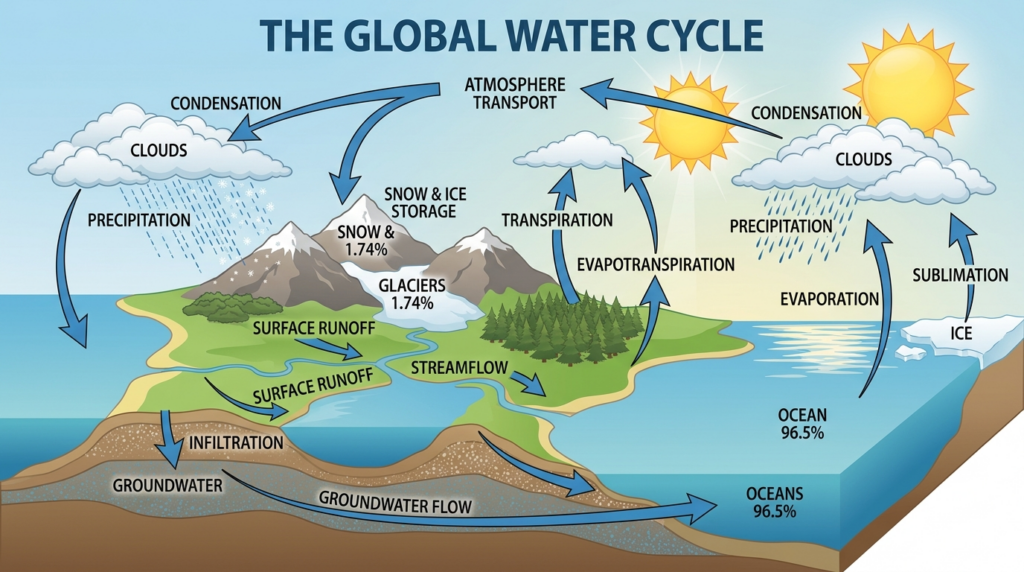
Despite the massive amount of water they carry, atmospheric rivers are rarely considered part of our usable water supply. Most water systems today rely on visible and centralized sources such as rivers, lakes, and groundwater.As global water demand increases and water scarcity becomes more widespread, this approach is being challenged.
As discussed in broader water sustainability strategies, solving water scarcity requires more than conservation, it requires rethinking how water is sourced and managed. Atmospheric rivers highlight an important insight: a large portion of Earth’s freshwater exists in motion, outside traditional infrastructure.
Can We Use Atmospheric Moisture as a Water Source?
The idea of using water from the air is no longer theoretical. Advances in technology now make it possible to capture atmospheric humidity and convert it into clean drinking water. These systems, often referred to as air-to-water technology, extract moisture from the air and produce water locally, creating new opportunities in areas where traditional sources are limited or unreliable.
At the same time, water scarcity is increasing due to climate change, population growth, and rising demand. In many regions, relying on a single water source is no longer sufficient.
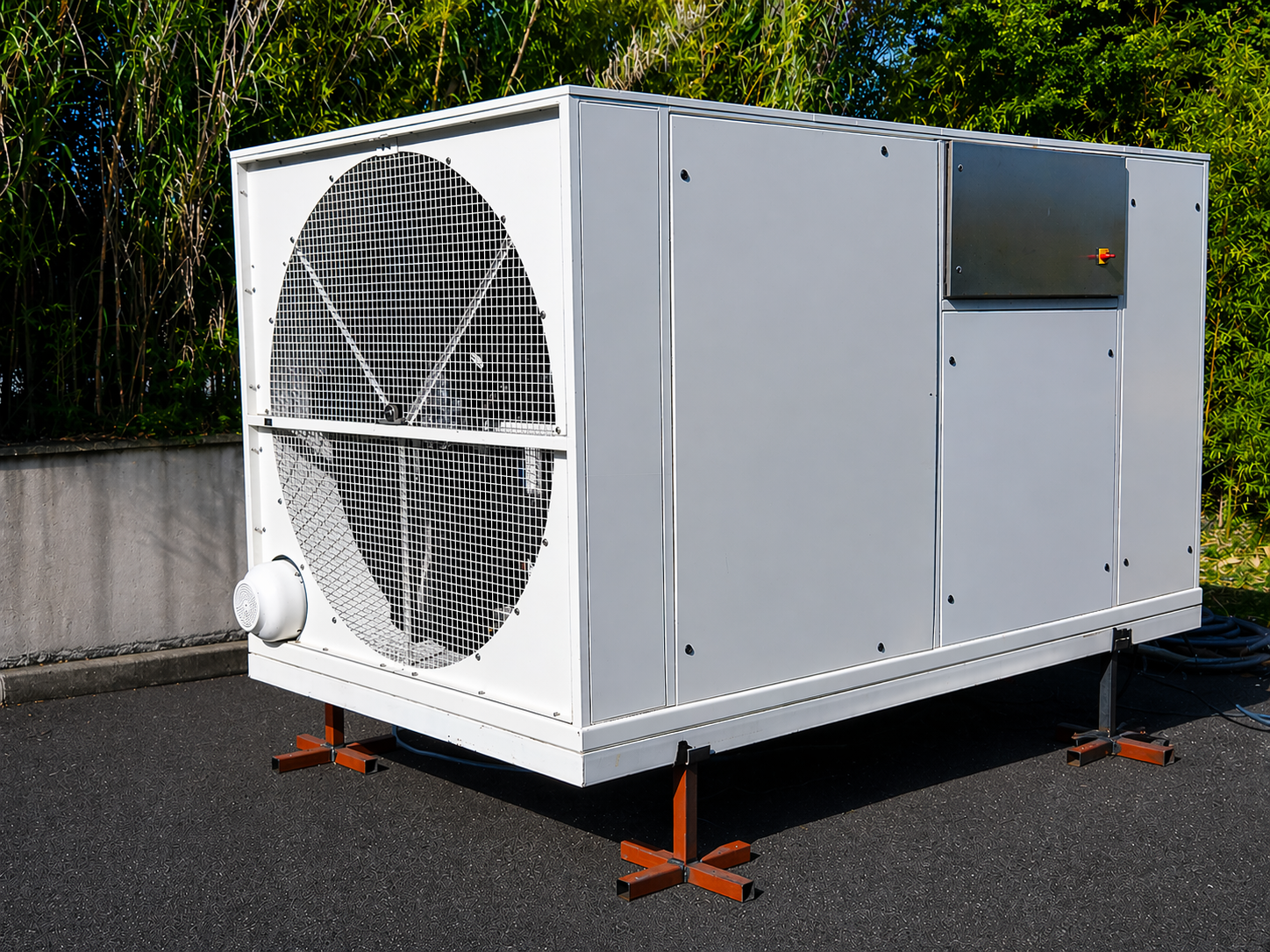
This is why alternative water solutions are becoming more important. Combining sources can create more resilient systems. Rainmaker Holland is developing these solutions, helping to expand access to clean water while reducing dependence on centralized infrastructure.
The Benefits of Air-to-Water Technology and Decentralized Systems
Air-to-water technology offers important advantages in addressing water scarcity. Because water can be generated locally, reliance on long-distance transport and large-scale infrastructure can be reduced. This makes it possible to deploy solutions in remote, coastal, or water-stressed regions where traditional systems may not be reliable.
At the same time, decentralized water systems contribute to greater flexibility. By producing water closer to where it is needed, they allow supply to adapt more easily to changing conditions. Combining different technologies, such as air-to-water generation, water-to-water systems and rainwater capturing, can further strengthen resilience by ensuring that water supply does not depend on a single source.
The Future of Water: Beyond Traditional Sources
Atmospheric rivers demonstrate that water is not limited to what we can see on the ground. A continuous flow of moisture exists in the atmosphere, influencing weather patterns and global water availability.As pressure on traditional water systems increases, tapping into alternative sources such as atmospheric moisture becomes more relevant.
Technologies that capture water from the air represent one of the emerging solutions to expand global water supply. This shift reflects a broader change in how we think about water: from a fixed, location-dependent resource to a dynamic and accessible system.
Rethinking Water in a Changing World
Atmospheric rivers are a powerful reminder that water exists in more places than we often consider. They highlight both the scale of the global water cycle and the opportunity to rethink how water is sourced.
Addressing water scarcity will require a combination of approaches, including conservation, innovation, and the use of alternative water sources. By expanding beyond traditional systems and embracing innovation, it becomes possible to build more resilient and sustainable water supply networks.
As interest in topics such as atmospheric rivers, water scarcity, and alternative water solutions continues to grow, one thing is clear: the future of water is not just on the ground, it is also in the air.